
China has just done something surgical and potentially destabilizing to the US global sanctions regime: it has told Chinese parties that obeying certain US sanctions is unlawful.
The notice was short, written in the dry language of a ministry announcement. However, one can argue, it marked a sharper turn in the long contest over American financial power.
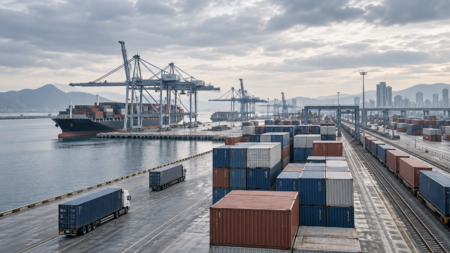
On May 2, 2026, China’s Ministry of Commerce issued a blocking order directed at US sanctions imposed on five Chinese petrochemical and refining companies accused by Washington of involvement in Iranian oil transactions. The order names Hengli Petrochemical (Dalian) Refining Co., Shandong Shouguang Luqing Petrochemical Co., Shandong Jincheng Petrochemical Group Co., Hebei Xinhai Chemical Group Co., and Shandong Shengxing Chemical Co. It says that Chinese parties must not recognize, implement, or comply with the relevant U.S. measures, including SDN List designations, asset freezes, and transaction bans imposed under Executive Orders 13902 and 13846.
The order does not declare that all Chinese companies may ignore all US sanctions. It is narrower in scope. The order is aimed at a specific set of US Iran-related sanctions against specific Chinese companies. However, it is still a serious escalation. It turns what had often been a practical commercial choice into a direct conflict of law.
The US action came first. On April 24, OFAC sanctioned Hengli Petrochemical’s Dalian refinery and approximately 40 shipping firms and vessels. Treasury said Hengli had purchased billions of dollars’ worth of Iranian petroleum and described China’s independent “teapot” refineries as vital buyers for Iran’s oil economy. Four days later, OFAC warned financial institutions about sanctions risks tied to China-based teapot refiners. The alert said China buys about 90 percent of Iran’s oil exports, that teapot refiners buy the majority of that oil, and that banks should apply heightened diligence to transactions involving Chinese refineries, especially in Shandong Province.
This where we find a collision point. Under US law, US persons generally may not deal with SDNs, and property of designated parties in the United States or under US-person control must be blocked. Non-US banks and companies can also face secondary-sanctions risk for certain dealings with designated refineries or others operating in Iran’s petroleum sector. Under China’s new order, however, Chinese parties are told not to give effect to the same US restrictions.
A global company doing business internationally, including both US and China, may therefore be punished by one legal system for doing what the other legal system demands.
The Old Pattern Has Changed
For years, Beijing denounced unilateral US sanctions and “long-arm jurisdiction.” However, many Chinese banks and large companies still acted with caution. They did not need to endorse US sanctions to fear them. Access to dollars, correspondent banking, US technology, insurance, and global capital markets gave OFAC a long reach.
That is what makes this order different. Media outlets have already described the move as an “unprecedented” act of defiance and noted that China had often criticized US sanctions while quietly allowing major firms to comply in practice to protect access to the US financial system. Now China is using its own legal machinery to make non-compliance with US measures a matter of domestic policy.
China’s 2021 Blocking Rules supplied the framework. Those rules apply where foreign legislation or measures unjustifiably restrict Chinese citizens or organizations from normal economic activity with a third country. The Rules allow Chinese authorities to issue prohibition orders, permit Chinese parties to seek exemptions, allow injured Chinese parties to sue for compensation, and authorize warnings, corrective orders, and fines for non-compliance.
The May 2 order is the legal machinery moving the Rules from shelf to street.
Europe Tried This Before
China is not the first major economy to object to U.S. extraterritorial sanctions through blocking law.
The closest analogue is the European Union’s Blocking Statute. The EU adopted it in 1996 after the United States took measures concerning Cuba, Iran, and Libya. The statute was designed to protect EU operators from the extraterritorial effects of certain third-country laws. It nullified, within the EU, foreign court judgments based on the listed foreign laws. It allowed EU operators to recover damages caused by those laws. It also prohibited EU operators from complying with the listed foreign requirements unless they obtained authorization from the European Commission.
The EU revived the issue in 2018 after the United States withdrew from the Iran nuclear deal and reimposed Iran sanctions. The Commission updated the Blocking Statute’s annex to cover the reimposed US Iran measures, with the stated aim of protecting legitimate EU trade with Iran.
The EU experience shows both the power and the limits of blocking laws.
In Bank Melli Iran v. Telekom Deutschland, the Court of Justice of the European Union held that the EU prohibition on complying with US secondary sanctions could be relied on in civil proceedings. It also held that the prohibition may apply even when there is no specific US administrative or judicial order directing compliance. But the court recognized the hard edge of the problem. The EU rule may stop a company from blindly following US sanctions, but courts still must consider whether forcing the company to continue the business would expose it to disproportionate harm. Bank Melli Iran v. Telekom Deutschland
That case is a useful warning. Blocking statutes can create legal rights. They can make contract terminations harder. They can expose companies to damages claims. But they do not make US sanctions disappear. They do not reopen dollar clearing. They do not persuade every bank to process a payment. They often leave companies standing between two sovereigns, each asking for obedience.
The Likely Immediate Impact
The first impact of the Chinese order will be uncertainty.
Under US sanctions, banks, insurers, shippers, commodity traders, inspection companies, logistics providers, and buyers of petroleum or petrochemical products will need to know whether they are touching any of the five named Chinese companies, their subsidiaries, their vessels, their banks, their brokers, or their cargoes. US sanctions risk will not be limited to direct contracts. Front companies, brokers, deceptive shipping practices, ship-to-ship transfers, false documentation, vessel-location manipulation, and cargoes relabeled as originating elsewhere – will have to be considered as well.
The hardest cases will obviously involve global institutions with both US and China exposure. A Chinese bank, for example, may face pressure from US sanctions if it handles payments for a designated refinery. But refusing the payment because of US sanctions may create risk under China’s blocking order. A non-Chinese multinational may face a different version of the same problem if it has Chinese subsidiaries, US operations, dollar flows, US-person staff, US-origin technology, or contractual obligations in China.
The Chinese order may also separate companies by risk appetite. Smaller Chinese firms with limited US exposure may be more willing to continue business with the named refiners. Larger banks and multinationals may not be. For them, the loss of US financial access is still an existential risk. The Chinese order raises the cost of compliance with US sanctions and does not erase the cost of ignoring them.
The immediate result may, therefore, be quiet rerouting. Payments may move away from dollars. Contracts may be amended. Banks may ask more questions. Cargo diligence may become more intrusive. Companies may stop saying, in writing, that they are acting “because of US sanctions.” Lawyers will be asked to separate sanctions compliance from commercial discretion, credit risk, internal risk limits, force majeure, illegality, and reputational concerns.
There will be discussions, disruptions and reconsiderations of company-wide risks.
How China’s Measures Could Evolve
China now has several possible paths.
The first is selective enforcement. Beijing could use blocking orders in a small number of high-profile cases. This would send a political message without forcing a full break with the dollar system. That is the least disruptive path.
The second is administrative pressure. Chinese authorities could begin asking companies why they refused transactions, terminated contracts, closed accounts, or added sanctions clauses. Warnings and rectification orders could follow. Fines could come later. China’s 2021 Blocking Rules already provide the basic tools for that sequence.
The third is private litigation. A Chinese company harmed by another party’s compliance with a blocked foreign measure may bring claims in Chinese courts. This mirrors, in broad concept, the EU model. It also creates leverage in contract disputes. A termination that looks simple in New York or London may look very different in Shanghai or Beijing. This is something for contract lawyers to keep in mind.
The fourth path is counter sanctions. In April 2026, China issued broader State Council rules on countering foreign states’ unlawful extraterritorial jurisdiction measures. Those rules stated that China could take countermeasures, create a “malicious entity list” for foreign organizations and individuals that promoted or participated in such measures, prohibit organizations and individuals from enforcing or assisting unlawful foreign jurisdiction measures, and support lawsuits by Chinese citizens and organizations affected by such measures.
The fifth possible path is a sectoral move. Today’s order concerns Iran-related oil sanctions. Tomorrow’s could concern technology, shipping, insurance, defense supply chains, critical minerals, data, telecommunications, or financial services. China’s leverage is primarily commercial. China remains the world’s second-largest economy and a major trading partner for more than 150 countries and regions. That gives Beijing tools the EU did not always have in the same form: market access, procurement, customs treatment, licensing, investment approvals, and supply-chain pressure.
China can always write more blocking orders. The real question, however, is whether it decides that enforcement is worth the economic cost.
What This Means for the US Sanctions Program
The U.S. sanctions program has long depended on a simple commercial fact. Many companies would rather lose a sanctioned customer than lose the United States.
That fact remains powerful. The US dollar, US banks, US technology, US investors, and US enforcement agencies still shape global risk decisions. China’s order has added a second factor. Some companies may also be unwilling to lose China.
This may not necessarily end US sanctions but will chip away from US sanctions’ universality.
For targets with no serious China connection, little changes. For targets whose trade can run through China, in renminbi, through non-US banks, using non-US goods and non-US insurers, the calculus becomes more complicated. US sanctions may still bite, but the bite may be less clean. The world may begin to see more divided sanctions zones. One zone is built around the US financial system. Another is built around Chinese market access and Chinese legal protection. Many companies will operate in both. They will feel pressure from both.
That is the larger change. Sanctions compliance may become less like checking a list and more like choosing a legal home for each transaction. And risks will be nearly impossible to avoid.
Can the Legal Conflict Be Resolved?
There is no tidy legal answer. At the expense of stating the obvious: a US court cannot make China recognize an OFAC designation, a Chinese court cannot make OFAC unblock property in the United States, a contract clause cannot override mandatory sanctions law, a compliance policy cannot make two inconsistent sovereign commands consistent.
The conflict can be managed. It can be narrowed. It can be priced. But it usually cannot be solved by private parties alone.
The most durable solutions are governmental: diplomatic understandings, sanctions waivers, OFAC licenses, Chinese exemptions from blocking orders, delistings, wind-down periods, and quiet enforcement discretion. The EU Blocking Statute has had an authorization mechanism. China’s Blocking Rules also allow Chinese parties to apply for exemption from a prohibition order.
Courts can resolve individual disputes. They can decide whether a termination was valid. They can award damages. They can decide whether performance is excused. But courts will usually solve only one side of the problem. Businesses will still have to face the other sovereign.
That is why the practical response must start before a subpoena, lawsuit, blocked payment, or bank exit.
PRACTICAL RECOMMENDATIONS
Companies with direct or indirect exposure to US sanctions and China should not wait for the next blocking order. Companies should:
- map their touchpoints. That means US persons, US offices, US banks, dollar payments, U.S.-origin goods and technology, US investors, US software, US servers, and US decision-makers. It also means China subsidiaries, Chinese counterparties, Chinese banks, Chinese law contracts, Chinese courts, Chinese employees, and Chinese regulatory approvals;
- update screening. The SDN name is only the start. Do not forget about OFAC’s 50 percent rule can block entities owned by designated parties. Vessels, ship managers, cargo inspectors, brokers, ports, payment intermediaries, and front companies may be just as important as the named refinery;
- revisit contract language. A standard sanctions clause may now create risk if it requires a Chinese party to comply with a foreign measure that China has blocked. Contracts should address conflicts of law, mandatory-law carve-outs, licensing cooperation, notice obligations, alternative performance, suspension rights, termination rights, and dispute forum. Indemnities should be checked carefully. An indemnity that looks strong may be hard to enforce if it depends on conduct prohibited by local law;
- consider creating conflicts committees. These issues should not be left to a sales manager, a relationship banker, or a local logistics team. Legal, compliance, sanctions counsel, China counsel, finance, treasury, tax, and business leadership should be able to make fast decisions from the same record;
- document business reasons with care. In the EU, the Bank Melli case showed that a company may need to prove that its conduct did not seek to comply with blocked US sanctions where that appears to be the case. China’s order may create similar pressure in future disputes. Companies should not invent reasons. They should not use vague pretexts. They should record the actual legal, commercial, credit, operational, and risk reasons for a decision;
- plan for licenses and exemptions. In some cases, a company may need an OFAC license, a Chinese exemption, or both. In other cases, no license will be available. That answer should be reached early, not after funds are frozen or cargo is stranded.
- test payment and logistics routes. Renminbi settlement may reduce dollar exposure, but it does not eliminate secondary-sanctions risk. Non-US shipping may reduce one risk while increasing another if the vessel, manager, insurer, cargo origin, or document trail is compromised.
- train teams not to improvise. A single email saying “we are terminating because of US sanctions” can become evidence in a blocking-statute claim. A single payment routed through a US correspondent bank can become an OFAC issue. A single shipment with unclear origin documents can become both.
Related News
The Graham Act Waiver: What Companies Should Understand Now

Weekly Trade Update – September 21-27, 2026